

Silver boom towns just don’t get the love that gold boom towns do. Compare Sandon, B.C. with Barkerville, B.C. as exhibit A for my argument. Both are 19th century boomtowns that became ghost towns. Both are linear, creek-side towns in the foothills of nearby mountain ranges. Only one, however, has been rebuilt and operates as a provincial heritage park and national historic site.
That one, of course, is Barkerville, the heart and genesis of the Cariboo Gold Rush and at one time the largest city north of San Francisco and west of Chicago. It’s a cool place and well worth a visit if you’re ever in the Quesnel area.
Sandon, by contrast, was the heart of the Slocan Valley Silver Rush and at one time quite the salacious party town. It, too, is a cool place and well worth a visit if you’re ever in the Slocan Valley. But … it’s a very different experience to Barkerville.
While Barkerville has been rebuilt into a time capsule tourist attraction, Sandon is very much the same near ghost town it’s been for three-quarters of a century.
Authentic isn’t really the right word to describe the Sandon experience. It hardly looks as it did during its 1890s peak. Neither is it a collection of scattered relics and foundations hidden within a regrown forest. Let’s go with quirky homage to local history and a testament to human stubbornness at its best.
Where to Find Sandon
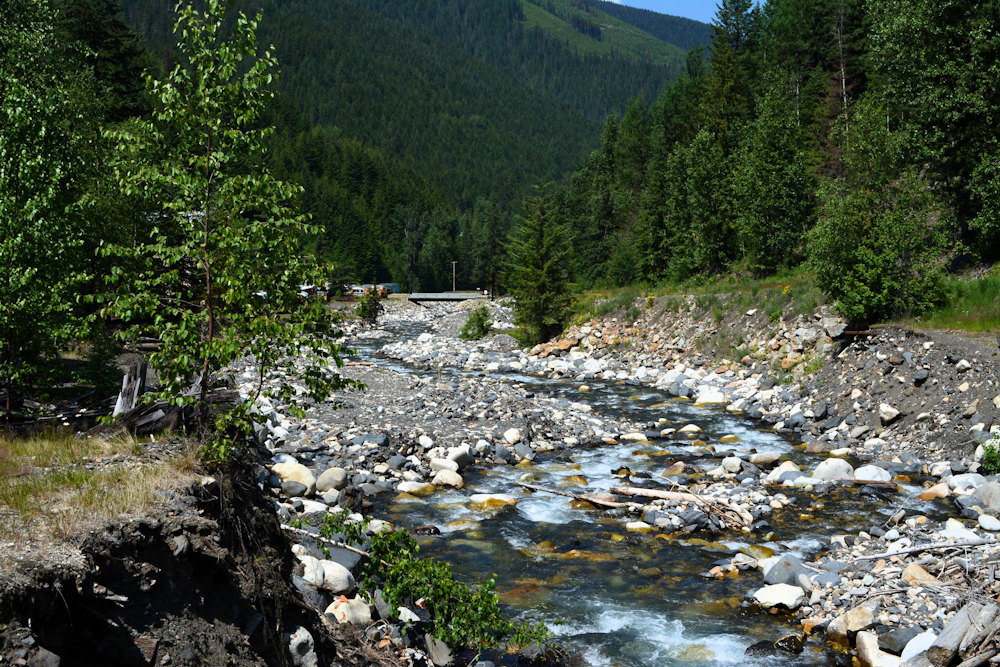
What remains of Sandon exists immediately downstream of the confluence of Sandon Creek and Carpenter Creek in the Selkirk Mountains of British Columbia, Canada. Idaho Peak and Selkirk Peak overlook from the southwest and Mount Payne from the northeast.
The closest living town is New Denver approximately 14km due west. New Denver lies on the eastern shore of Slocan Lake along Highway 6. To get to Sandon, take paved Highway 31A eastward for 8km and then turn southward onto gravel Sandon Cody Road at Three Forks for another 6km.
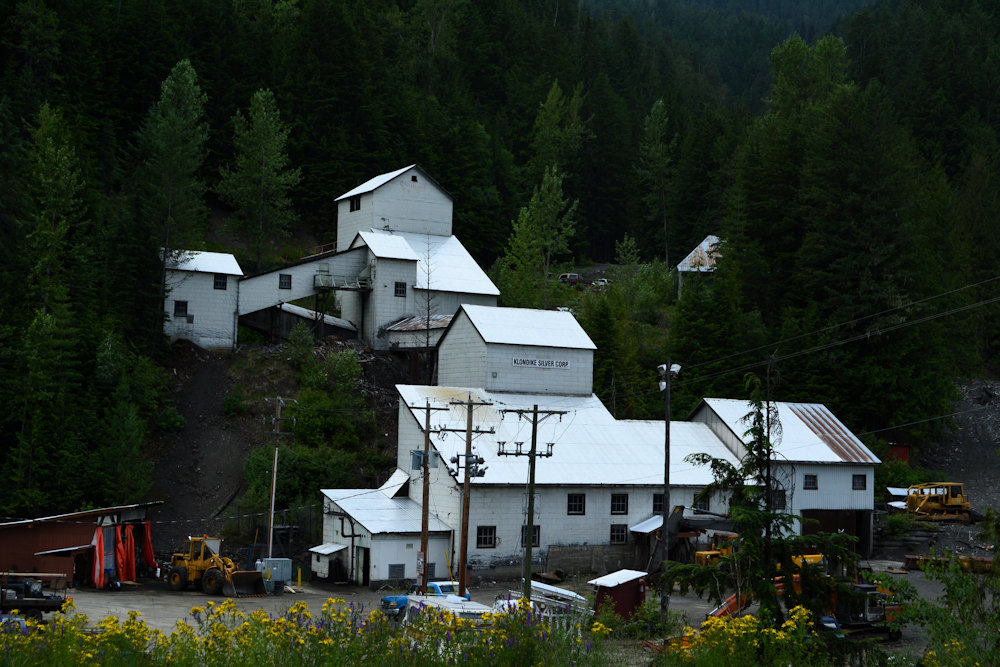
Sandon Cody Road takes you right to Sandon and beyond to the fully ghost town of Cody. As you approach town, on your right, you’ll see the modern mine works of Klondike Silver Corp.
At the northwest end of Sandon, you’ll see some signs welcoming you to town. You’ll want to turn right here, cross the bridge over Carpenter Creek and then turn left onto Slocan Star Street which takes you into the heart of Sandon. Or what’s left of it.
Sandon Historical Society Museum
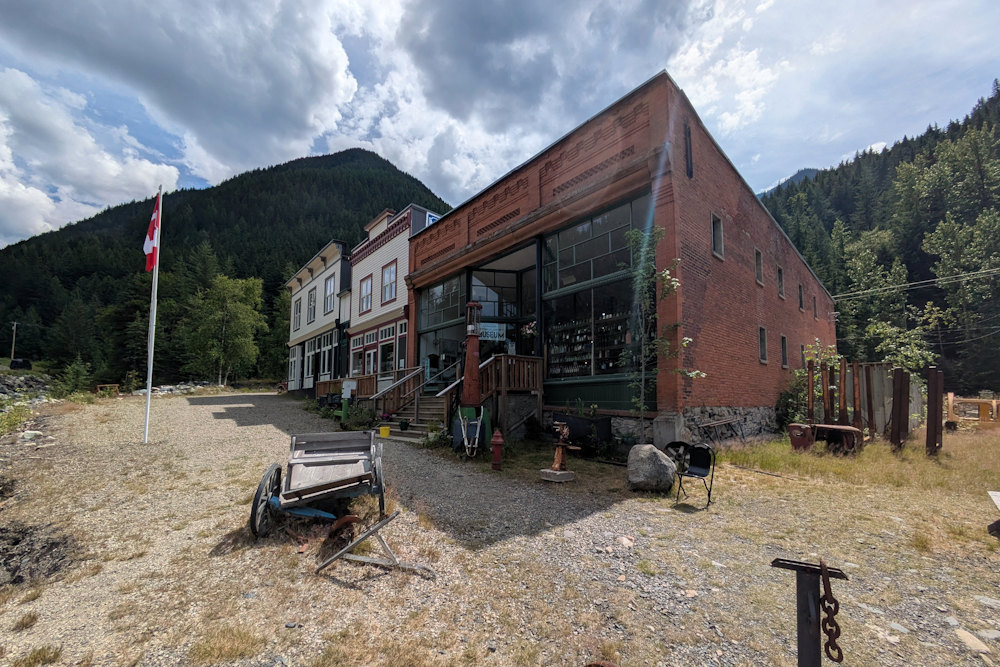
The best bet for starting your Sandon visit is to tour the Sandon Historical Society Museum. The museum is located in the Slocan Mercantile Block at the far end of town. It’s the last brick building still standing in town and originally operated as a general store.
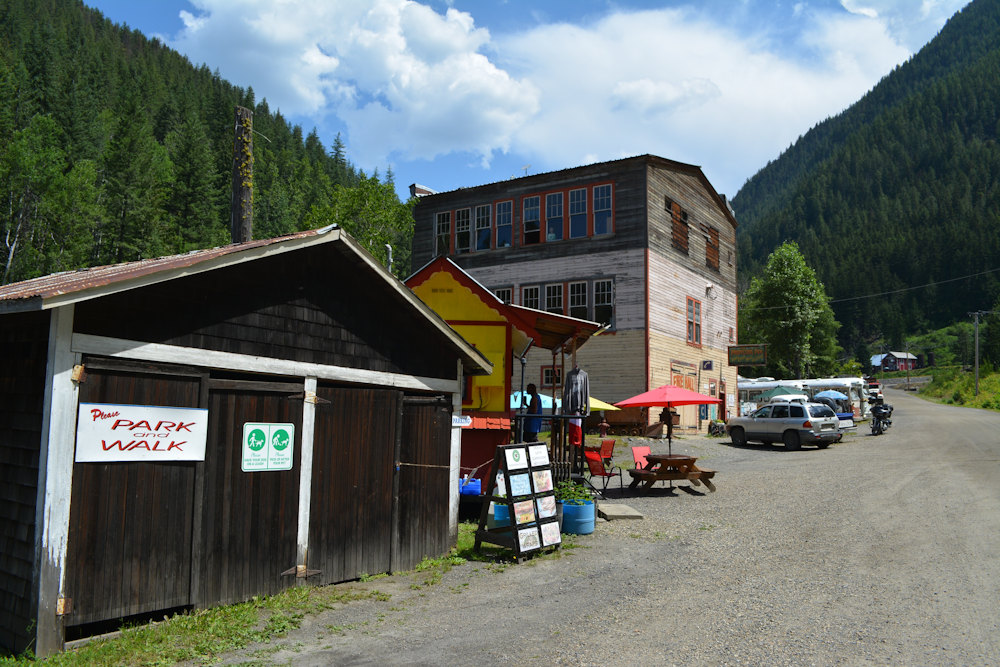
Note that here is no real parking lot in Sandon. Rather, spots to leave your vehicle can be found here and there between buildings and artifacts all along the street. You’ll see some signs asking you not to park a specific spot, but otherwise just find an opening and pull in. Everything you’ll want to see is easily walkable.
As you approach the museum entrance, you’ll notice that the entire mercantile block fronts onto Carpenter Creek. It’s kind of strange since you’d expect businesses to open onto a main street. Well, they once did.
After a destructive 1900 fire, Sandon was rebuilt with the main street directly overtop of the creek. By encasing the creek in a wooden flume, the town gained precious acreage in the narrow valley.
An equally devastating flood in 1955 exposed the folly in this plan, destroying the boardwalk-like main street. As a result, the museum and its neighbouring buildings appear “backwards” with the town’s main street now existing behind them.
Inside the Sandon Museum
Entry to the Sandon Museum is a modest $5 though you are welcome to donate additional funds to support the town. Keeping Sandon alive is a labour of love by a handful of plucky locals. Financial assistance from visitors helps keep this dream alive. Oh, and cash is your best bet as internet connectivity can be unreliable at times.
We’ve now been to Sandon twice … I know, crazy … and each time the person that greeted us upon entry has been both incredibly friendly and very educational. Have questions about the museum or the town, they can answer it. They’re more than just a money taker.
The museum is what pretty much what you would expect in a place like this. It’s jam-packed with antiques and artifacts associated with daily town life and the silver-lead boom that brought Sandon into existence.
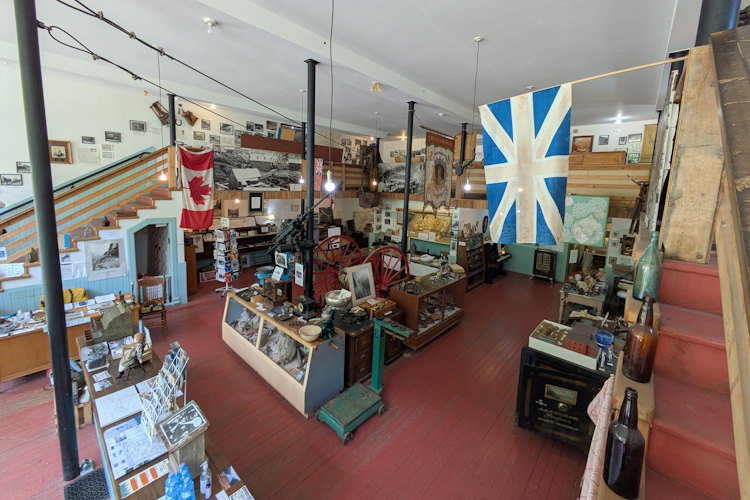
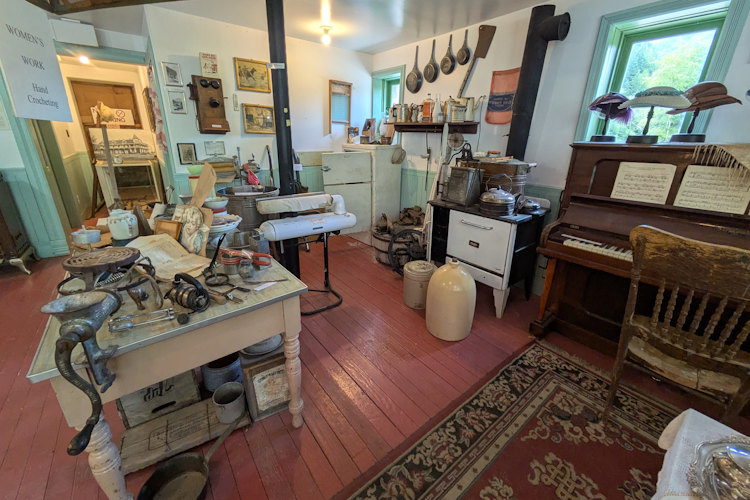
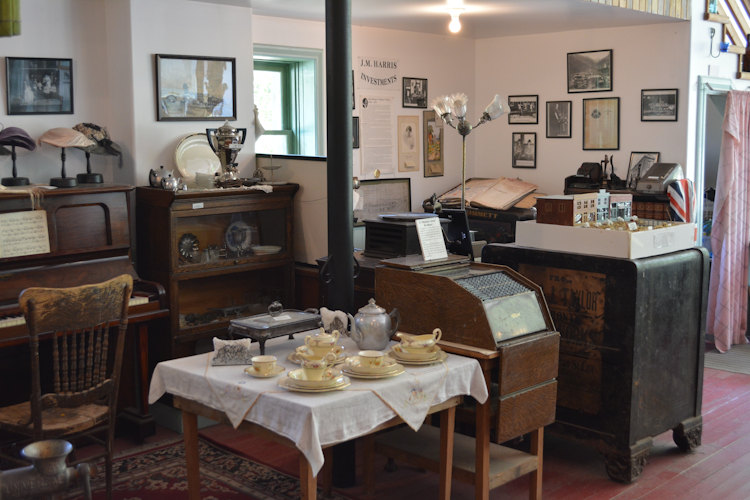
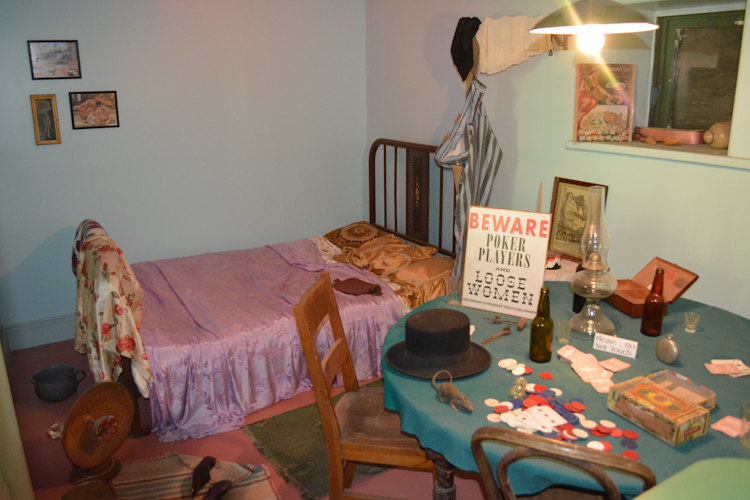
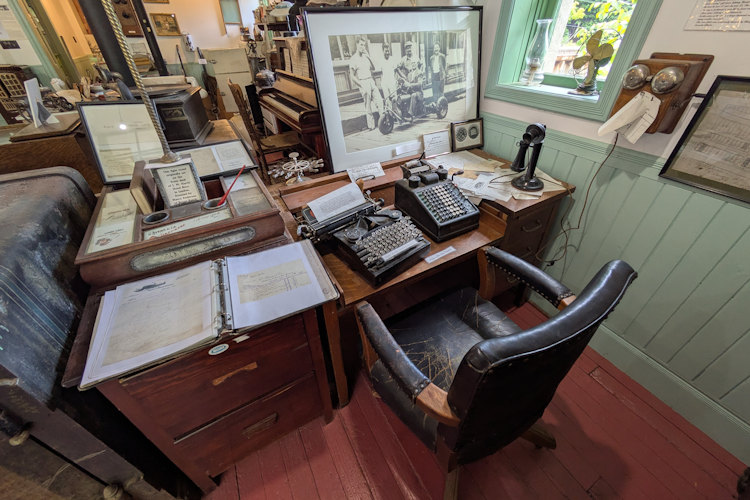
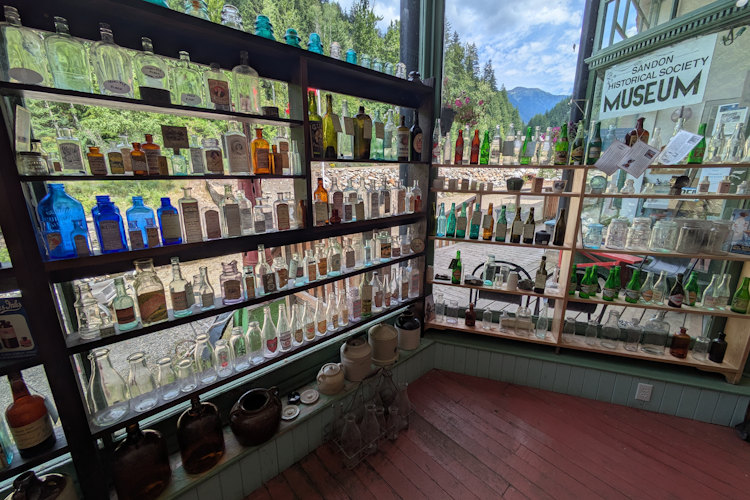
Much of the main room is split into theme areas. A recreated kitchen here, a recreated dining room there. An office. A bedroom. All filled with many objects of times gone by.
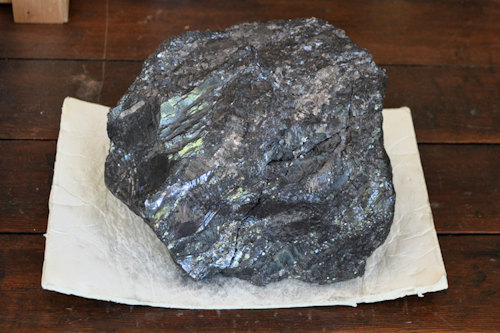
The display of coloured bottles is quite neat, especially if the sun is shining. Geology lovers will enjoy the handful of rocks on display including chunks of ore from the surrounding mountains.
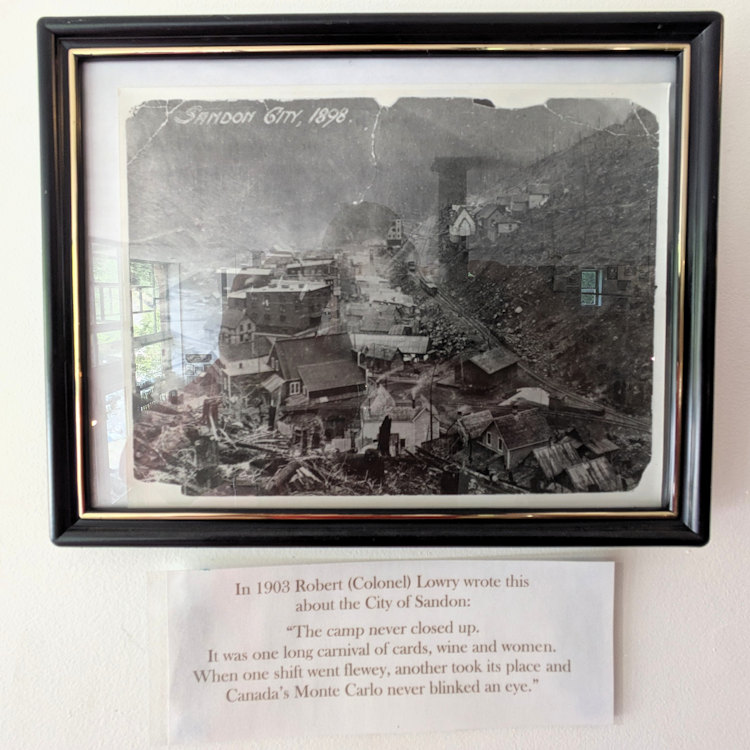
A mezzanine around the main floor has many old pictures of Sandon and the mining that occurred here during its heyday. Images like these never cease to amaze me. The reality of just how harsh life was in frontier boom towns a century ago hits you deep in the gut.
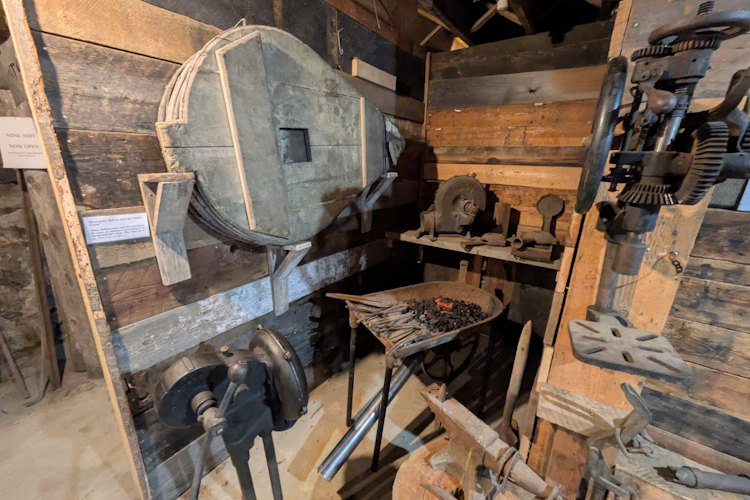
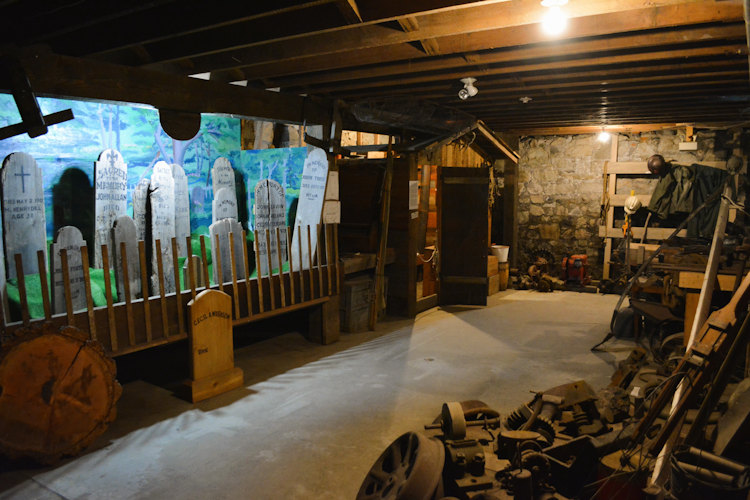
The basement presents a darker vibe. Heavy metal mining and construction equipment line the walls. Blacksmithing tools and a faux mining adit are interesting to explore. But it’s the simulated graveyard that’ll put a little chill in your spine. The tomb markers may honour famed residents of Sandon, but they’ll have you wanting to get back upstairs in short order.
Silversmith Power & Light Generating Station
Once you’ve completed your exploration of the museum, I recommend your next stop be the Silversmith Power & Light Generating Station. If you step out of the museum and turn to your right and advance to Sandon Creek, you’ll eventually see a bright red building up the hill to your right.
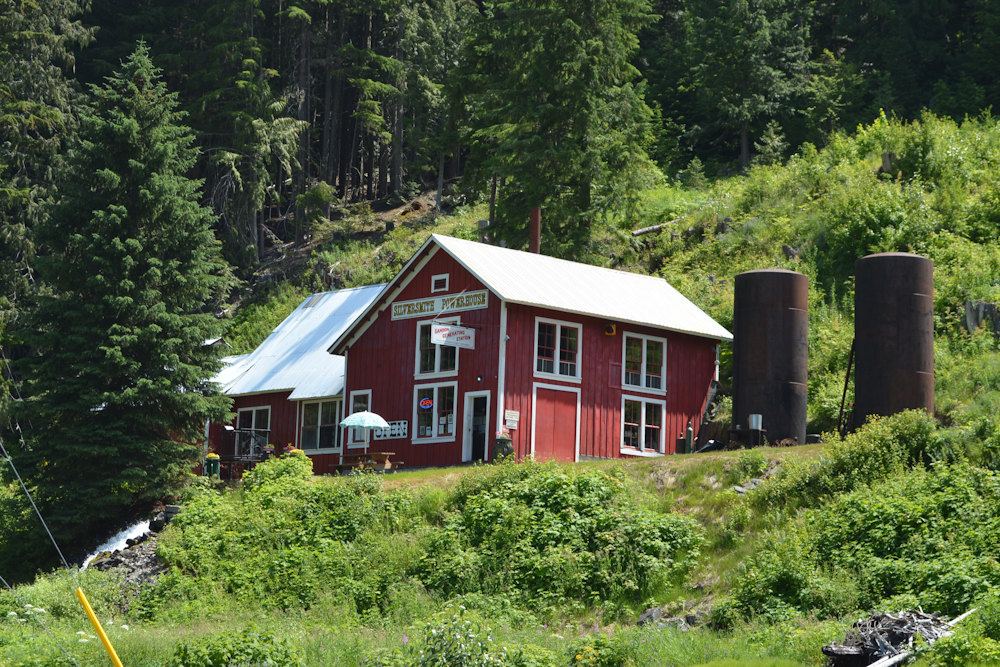
This family-owned hydroelectric generating plant has been operating since 1897! Originally known as the Slocan Star Plant, the restored and preserved generating station still supplies electricity to residents of Sandon and the New Denver area. It’s quite fascinating and you can tour it free of charge, though donations are gratefully accepted.
Our first visit to Silversmith was quite memorable. A boy, younger than my mid-teens son, greeted us at the entry and offered to tour us around. That fella was the most gregarious, precocious young man I’ve encountered in many a year. He’d have made a fabulous newsie back in the Sandon boom days.
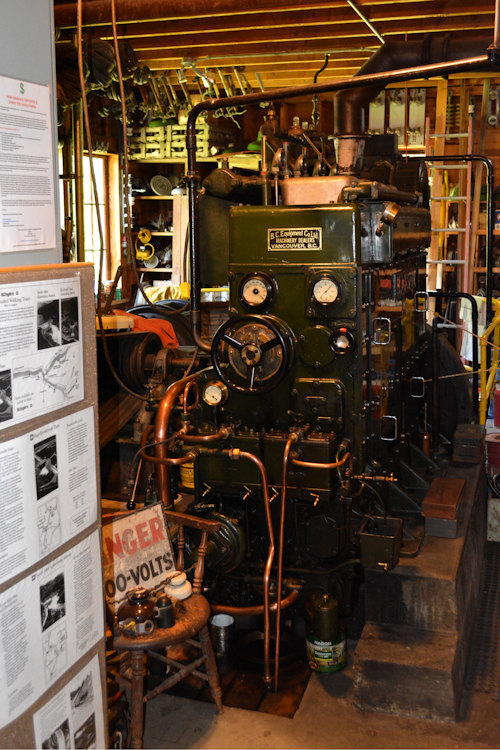
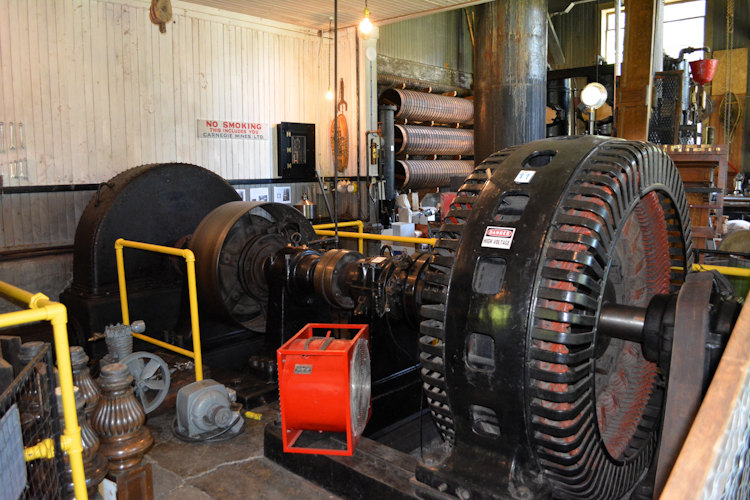
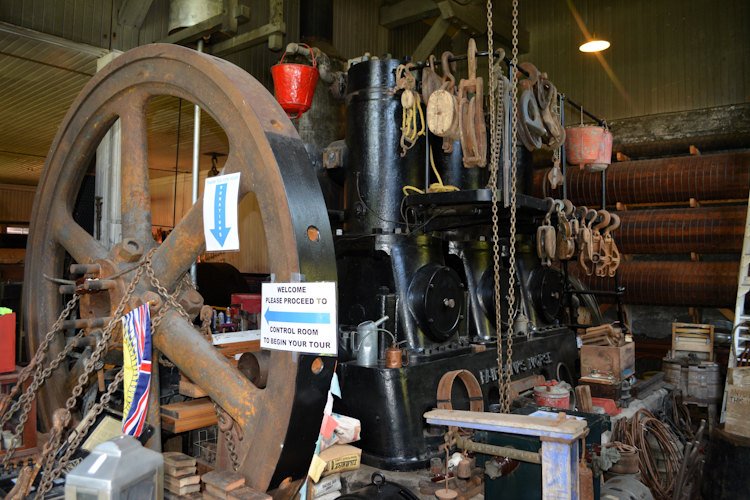
Inside the power station you’ll encounter plenty of heavy equipment, some retired and some still operating. It’s a fascinating glimpse into vintage electricity generation and an intriguing contrast to the “ghost town” below.
The Outdoor Museum that is Sandon
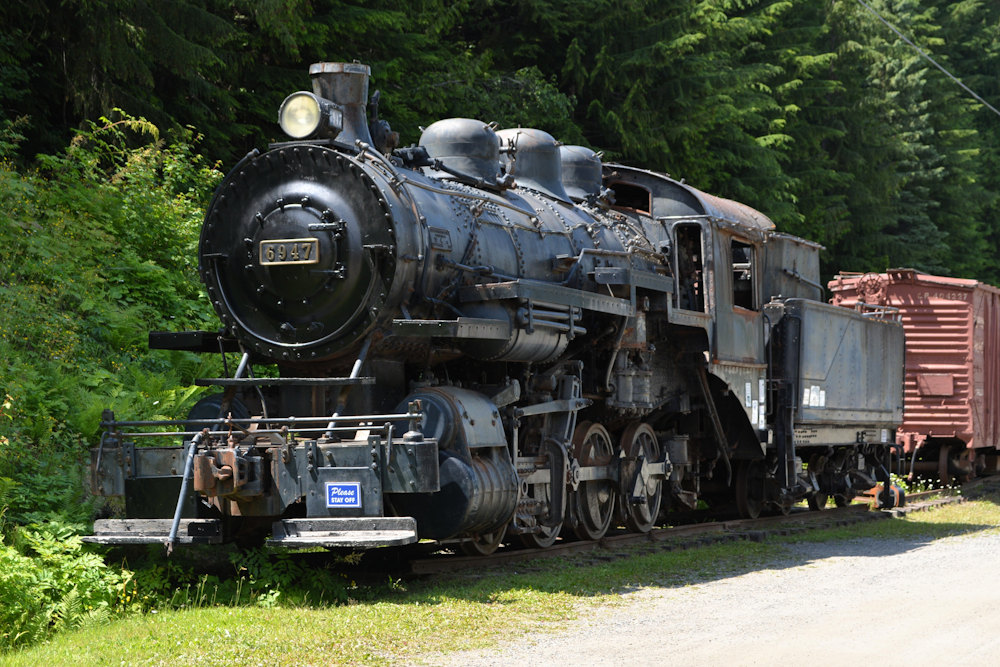
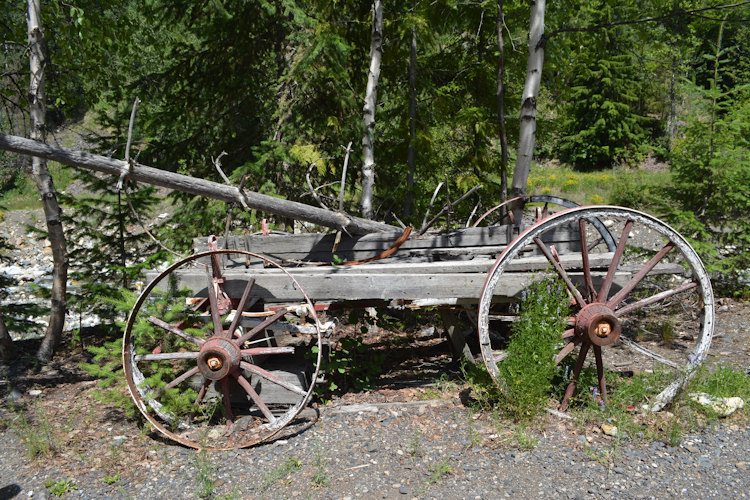
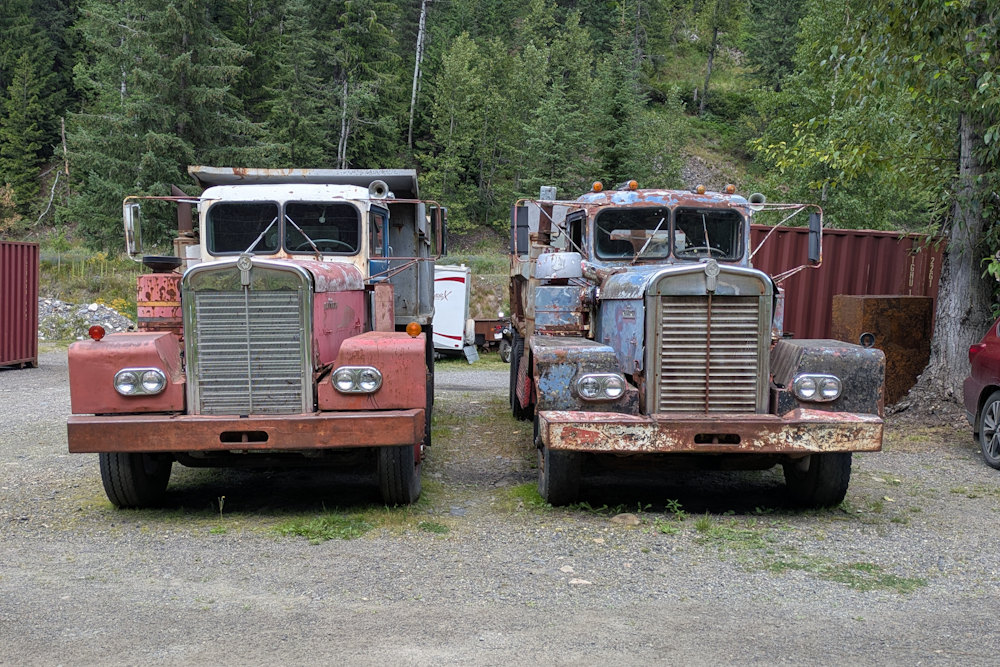
Now it’s time to investigate the remainder of Sandon, most of which is outdoors. Besides the remaining buildings, much of this is 20th century relics though a handful of 19th century wooden artifacts can be found. Old, rusted industrial machinery and trucks are stowed between buildings and along the edge of the creek.
The most prominent of these is the old steam engine retired on a section of track across from the town buildings. A couple of boxcars and flatcars trail behind but it’s the steam engine that’ll draw your attention. You are invited to ring the train’s bell if you want. Give it a good yank, though, it ain’t an easy bell to ring.
Another quirky addition to this makeshift, outdoor museum are the dozen or so retired trolley buses. Used in the 40s and 50s, these trolleys come from cities all over the Canadian west. You are able to look inside one of them but there really isn’t all that much to see.
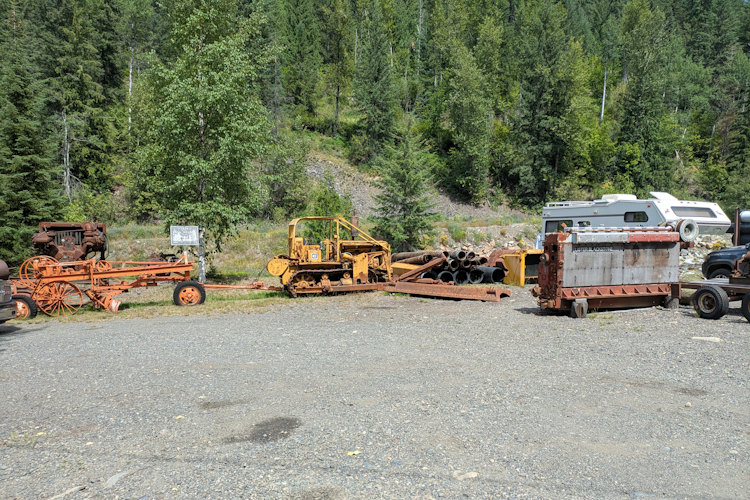
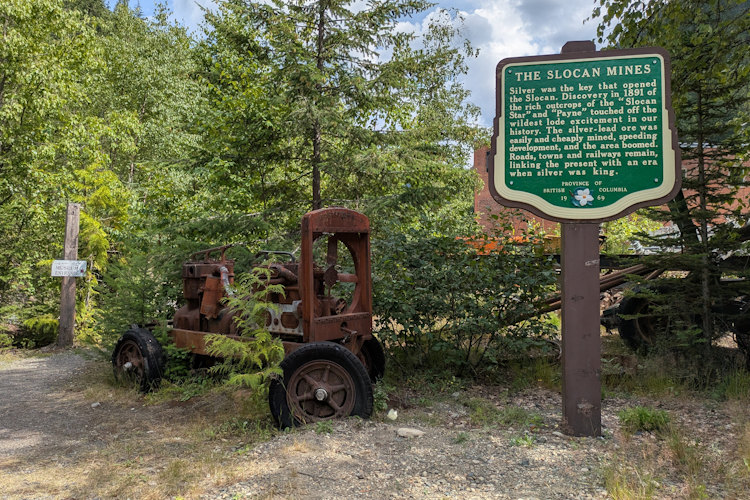
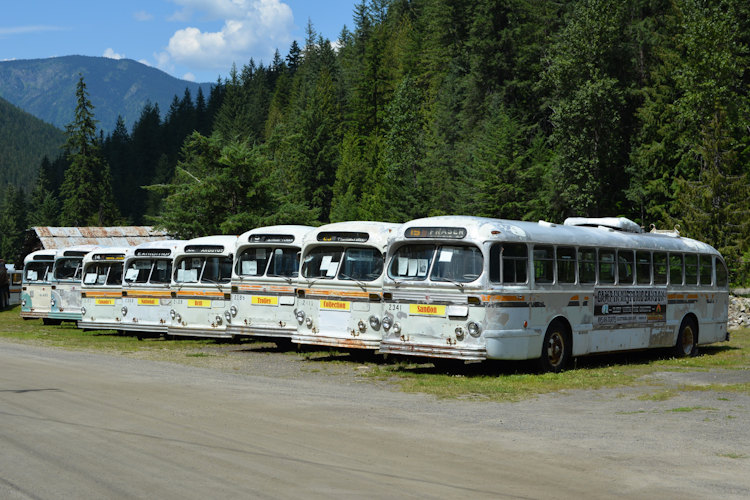
Other Attractions in Sandon
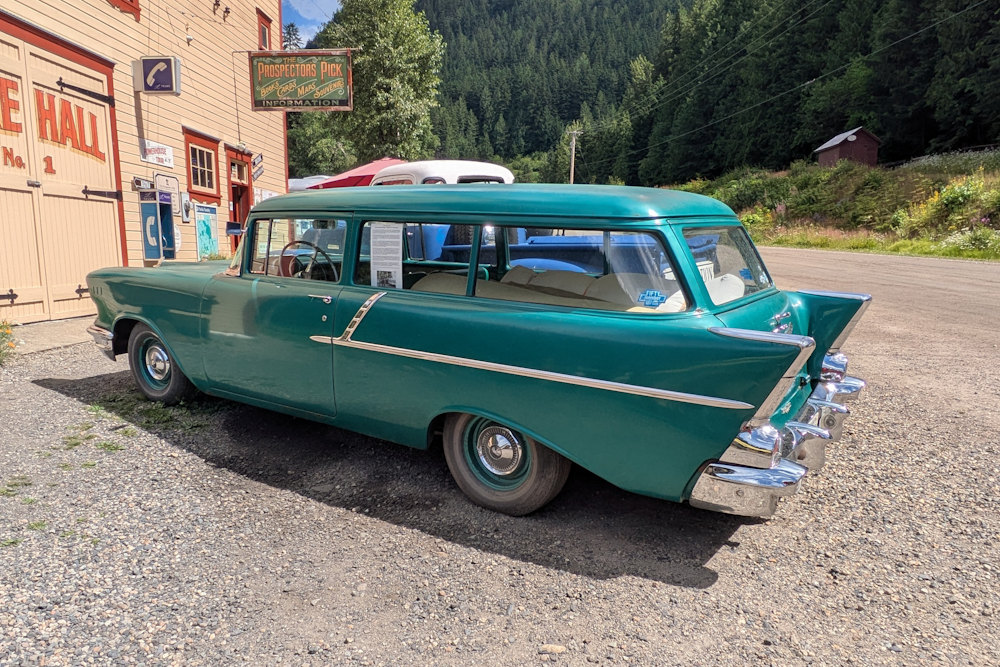
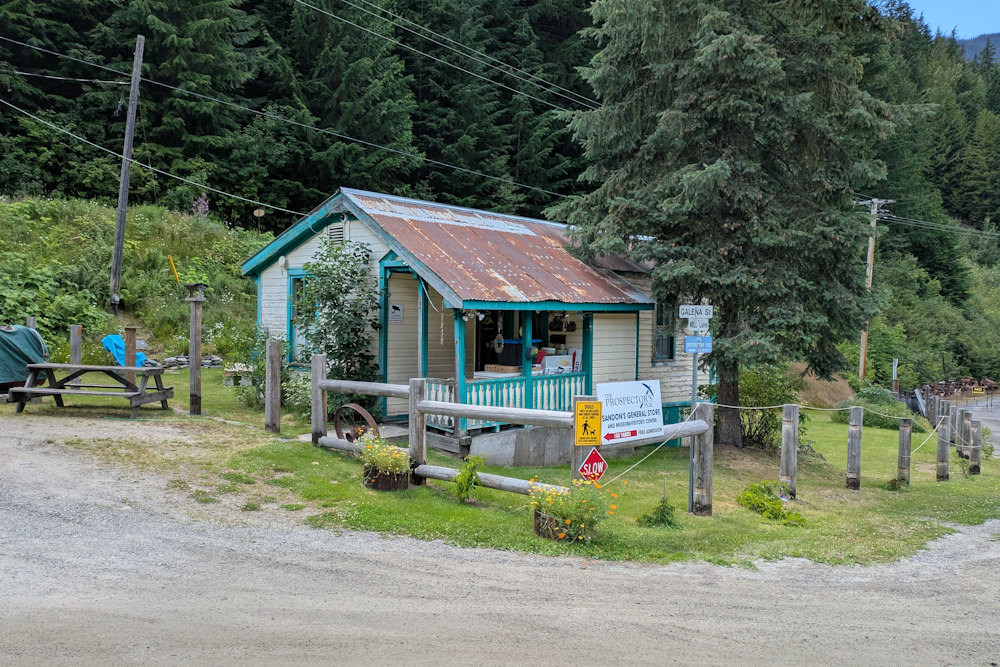
There are two other operating enterprises of note in Sandon, Prospector’s Pick and 14th Mountain Bistro. Located in the bottom of the city hall, Prospector’s Pick is part museum, part gift shop, and part visitor centre. Oh, and part coffee shop. It’s a little bit of everything.
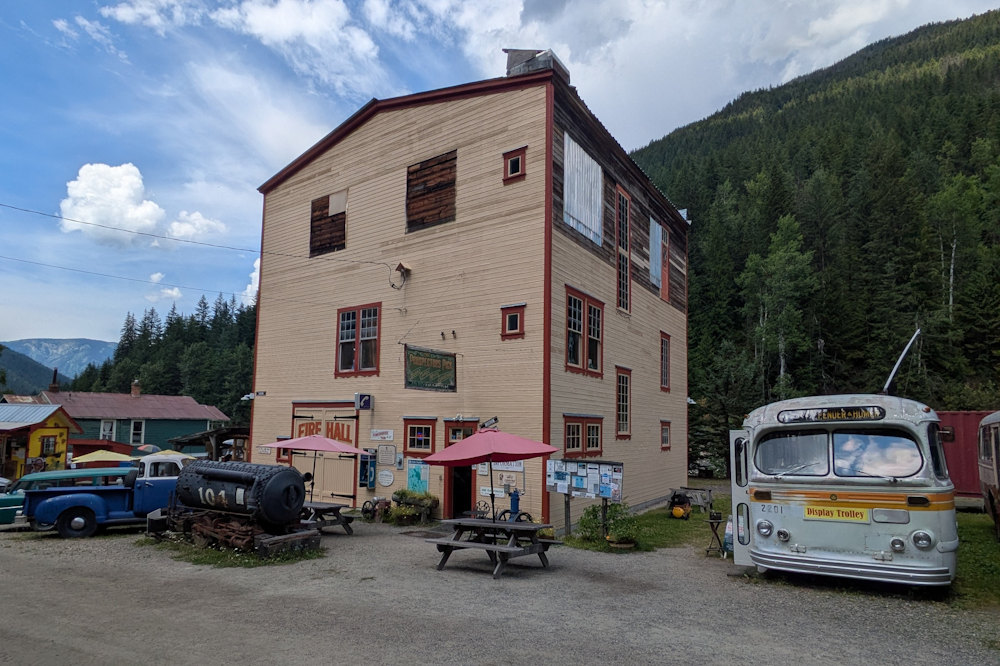
It’s a tad tight inside which made taking pictures difficult, especially when other patrons are with you. Most of the museum pieces are up and out of reach. The gift shop items, however, very much aren’t. There are all kinds of fun items to be purchased, be it branded clothing or replica street signs. And if you’re into coffee and a snack, there’s that too.
Alternatively, you might prefer are more filling lunch in which case the neighbouring 14th Mountain Bistro is ready to help. A small, modern structure, the bistro is akin to an elaborate food truck or roadside food stall. But with better wares.
They too have coffee in many configurations as well as other beverages to warm you up or cool you down. You can also fill your tummy with deliciousness ranging from breakfasts to wraps to ice cream treats and pies.
In and around the two buildings are an assortment of picnic tables to east at. Some come with canopies to shade you from the sun. You can also just stroll around the town and park your butt on a piece of machinery if so inclined.
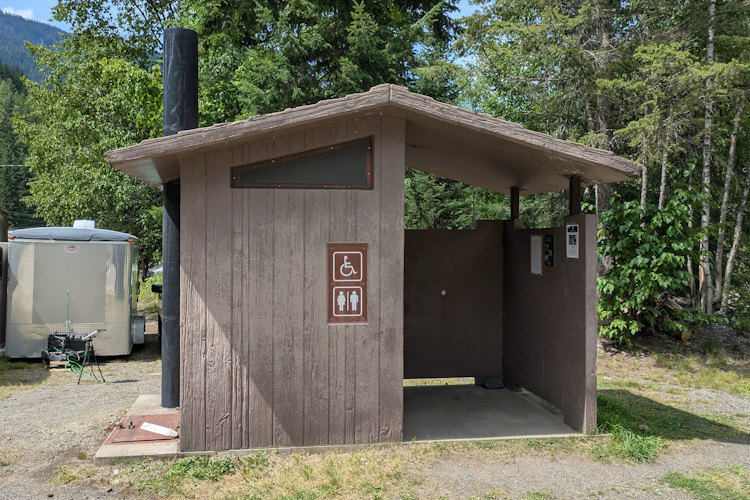
Dealing with umm … personal needs … is a bit tricky in Sandon. There aren’t any public washrooms with flush toilets and sinks available. A pit toilet is found in a bit of a green space between the Pick and the Museum. User beware as is the case with any pit toilet.
The internet suggests that you can camp in Sandon. The information is dated and I saw no evidence of such activity and there definitely isn’t a genuine campground present. If you can camp, it’ll certainly be rustic.
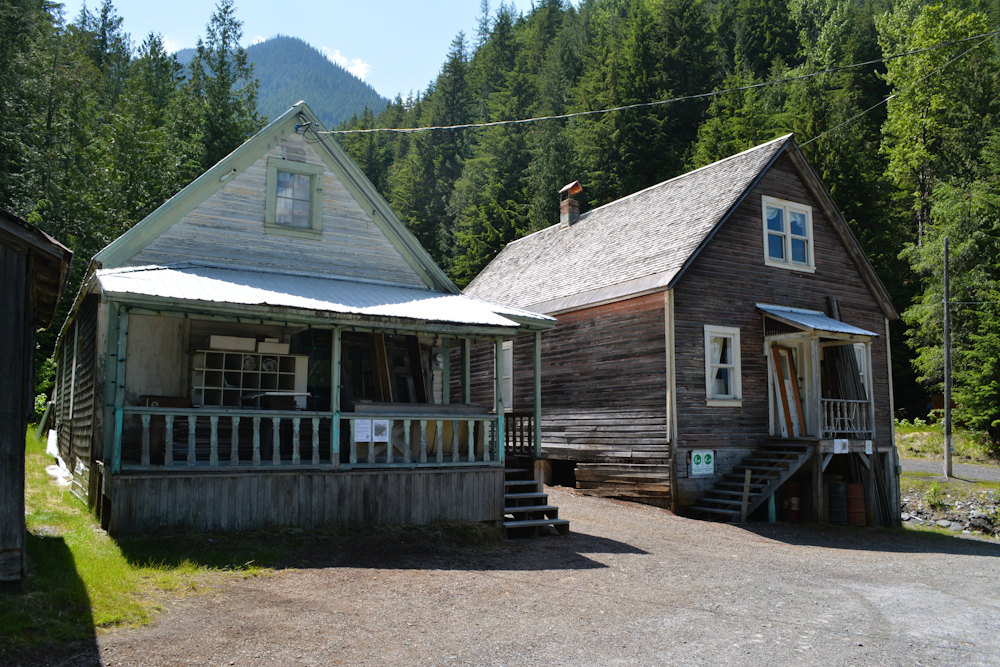
And that pretty much sums up all there is to in Sandon. There are some abandoned homes in the town as well as a couple that appear to still be lived in. But as far as tourist spots, that’s all she wrote. But fear not, there is plenty more to do in the area to make a full day trip out of your visit.
Cody, the “Real” Ghost Town
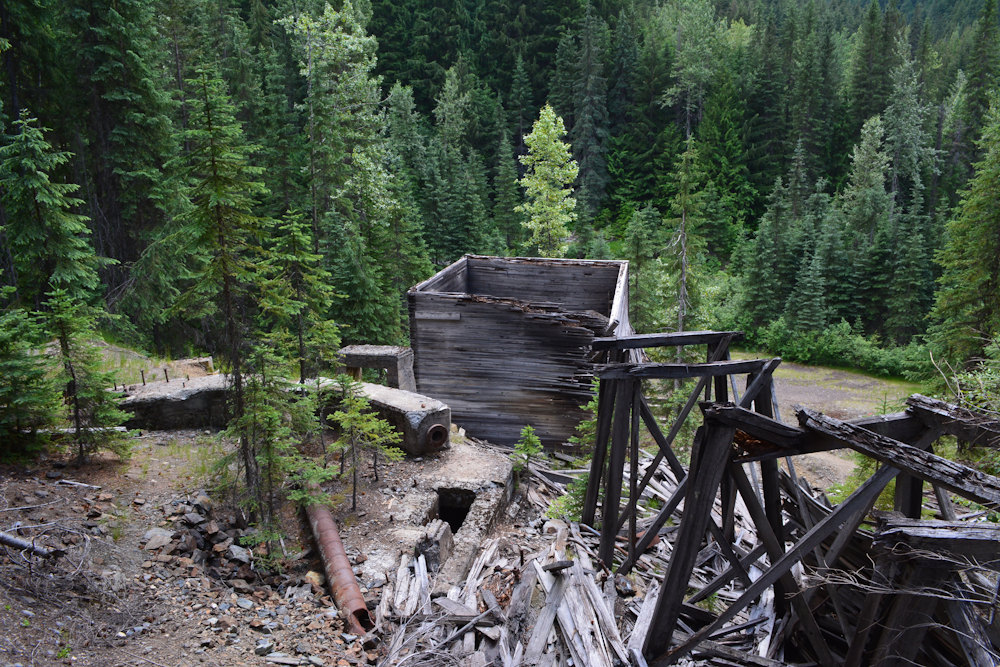
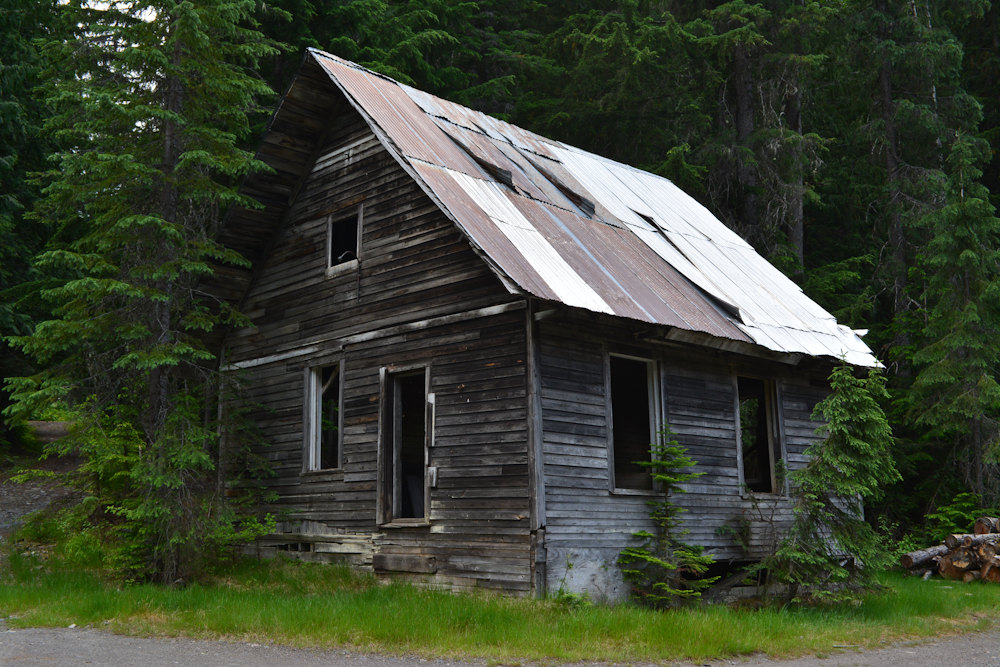
If you fancy visiting a “real” ghost town, you can drive a couple more kilometres along Sandon Cody Road to Cody. Cody is truer to what you likely envision a BC ghost town to be with only a few abandoned structures, or remains of such, in the woods. The road is passable but rough in spots. You won’t want to take your summer sports car up that away.
Hiking near Sandon
Beautiful nature is all around you in these parts, so hiking immediately comes to mind. And you’d be correct to do so as there are several trails in the area. Three of them start in Sandon itself and another at the junction of Sandon Cody Road and Highway 31A.
Carpenter Pass Trail is the most challenging of the lot. At 28km one way, the hike will take you past Cody, through tailings piles from the Con Mine and eventually to Mount Carlysle Backcountry Lodge. With significant elevation gain and rough terrain, this is not for the faint of heart.
You can shorten the hike length by driving past Cody a few kilometres, but it is nonetheless an arduous hike. I, needless to say, have not done it.
For something a less difficult, the K&S Trail which follows portions of the old Kaslo and Sandon Railway is both enjoyable and adaptable to your comfort with regards to length.
If you’re crazy, you can hike all the way to Kaslo some 30km away, but for a more reasonable Sandon-centric experience, the full trail to Payne’s Bluff, at 12.6km, is sufficient. Even that full length isn’t necessary as there are several points of interest along the way that you might choose as an end point.
We did exactly that, hiking the K&S Trail to the Payne Concentrator ruins before turning around and heading back to Sandon. At roughly 3.0km, this was a lovely hike, passing the Altoona Mine on the way.
Finally, you can also hike up to Idaho Peak from Sandon. Until recently, this was a drivable experience but flooding in 2020 damaged the road and it remains closed as of 2026. This is a shame because the view from Idaho Peak looks to be amazing. I would very much like to get up there sometime, but an 11km hike up a mountain is just too much for me.
Another hike we did is a portion of the Galena Trail. This hike comes in two lengthy segments: from Three Forks to New Denver and from New Denver to Rosebery. We hiked the 2.5km from the Three Forks trailhead to the Alamo Siding ore concentrator and ghost town.
Like the K&S Trail, Galena Trail is forested with dirt trails but because both follow former railway routes, they are relatively flat and not too strenuous. At least for the sections we completed. You’ll also encounter signage directing you to other trails not shown on popular websites like AllTrails. You’ll have no shortage of options should you enjoy hiking.
Slocan Valley
My son and I have twice come to the Slocan Valley to explore its silver mining history. It’s a beautiful place and significantly underdeveloped compared to other, prominent mountain valleys in British Columbia. Perhaps the lack of love for silver rushes compared to gold rushes is a good thing?
Whatever the case, if you’re looking for a fun adventure, come check out the Slocan Valley and the (almost) ghost town of Sandon. There’s great camping and hiking throughout the valley and the local history is undoubtedly fascinating.