Driving through the Slocan Valley, it’s hard to comprehend how big the 19th century silver/lead boom was in these parts. This is even more true when strolling around the ghost town of Sandon. And yet Sandon was once the terminus of not one, but two railroads built to remove ore from the nearby mountains.
Those railroads, the Nakusp and Slocan Railway (N&S) and the Kaslo and Slocan Railway (K&S), are both lost to history. But railroads like these no longer fully disappear. Instead, they are often repurposed as hiking trails as is the case with both the N&S and the K&S.
Recently I discussed our hike on the K&S Trail. In this post, I’ll recount our hike on the former N&S, now known as Galena Trail. We did portions of both trails during a day trip to Sandon last summer. Galena was the morning shift and a good thing too, because I was quite worn out by the time late afternoon rolled around.
The Three Forks Trailhead of Galena Trail
The full 13.8km Galena Trail is typically identified has having two segments. One segment runs 6.8km from New Denver north to Rosebery. The other segment runs 7.0km from New Denver east to Three Forks. Our morning hike focused on the latter and roughly only 2.0km of it.
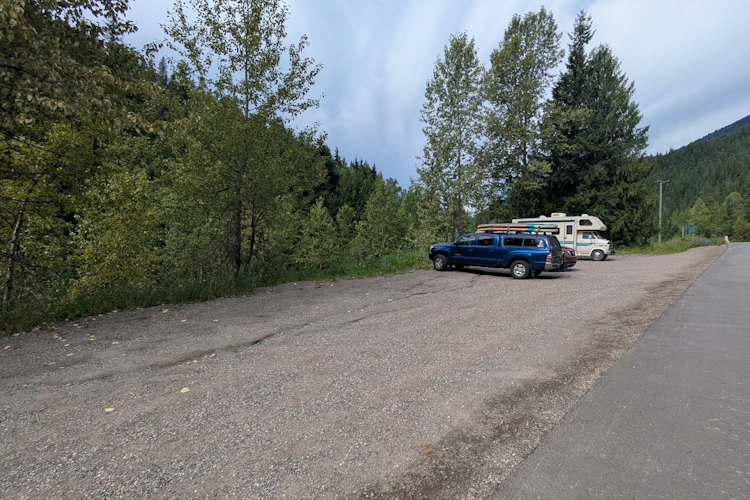
We began our hike at the trailhead near Three Forks. You’ll find this trailhead 8.5km east of New Denver immediately on your right after turning onto Sandon Cody Road from Highway 31A. A modest roadside gravel pullout serves as trail parking lot and a small sign on a pole let’s you know you’ve found the right place.
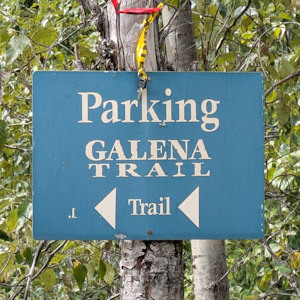
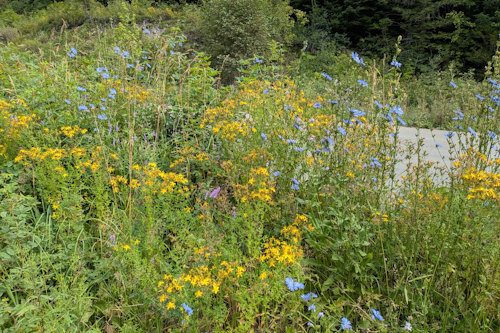
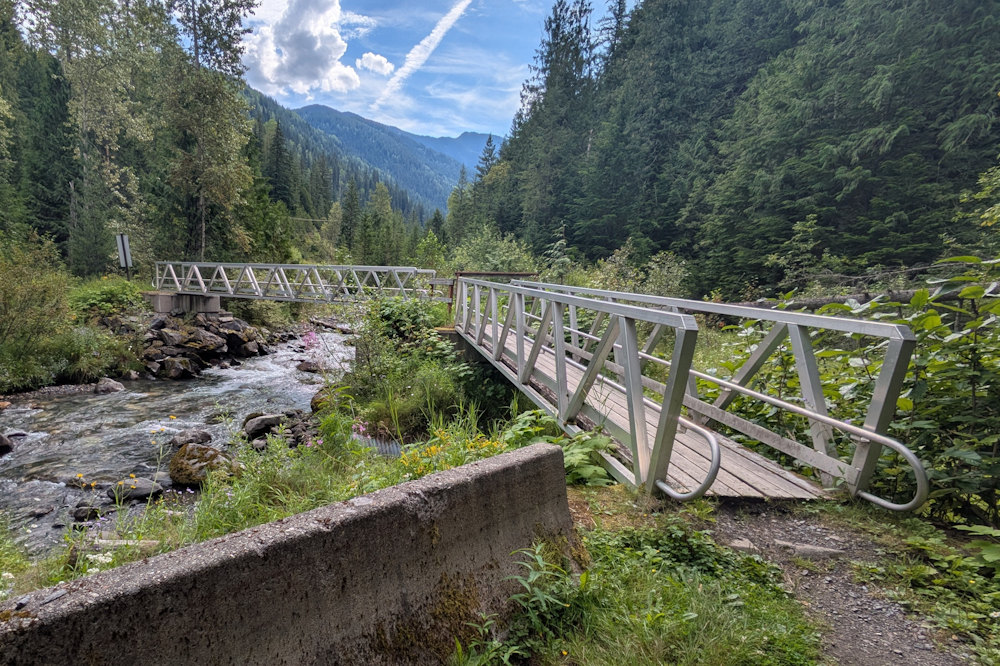
Galena Trail begins approximately 65m down the road from the parking lot. A gravel path lined with wildflowers and weeds passes beneath an arching trailhead sign and then into a patch of woods. It quickly crosses over Carpenter Creek via a metal bridge, turns to dirt and heads into the main forest.
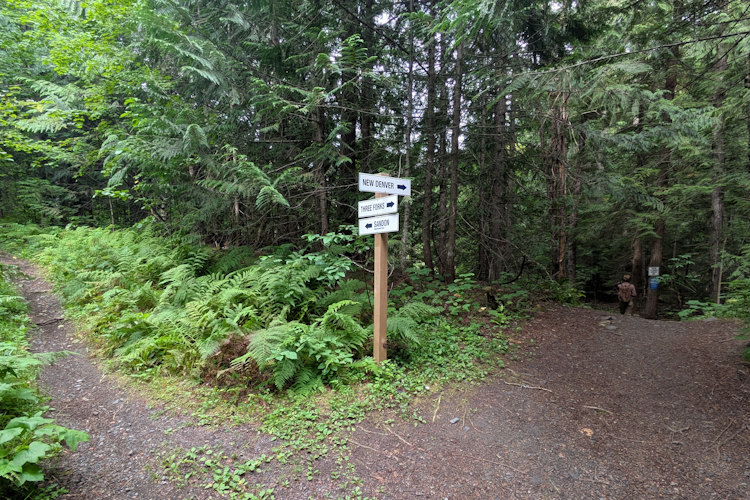
Early on you’ll encounter a fork in the trail. It too has signs directing you to continue on Galena Trail heading to New Denver or a second trail heading to Sandon. I’m unaware of a name for this trail to Sandon but it does suggest you can hike all the way to this infamous ghost town should you wish.
Galena Trail is almost entirely bare forest floor but with little in the way of tree roots. It is comfortably wide allowing side-by-side walking or easy passing of oncoming hikers. It’s also fairly straight and very level, not surprising considering its railroad origins. The flat terrain is excellent for those wanting (or needing) a more leisurely hiking experience.
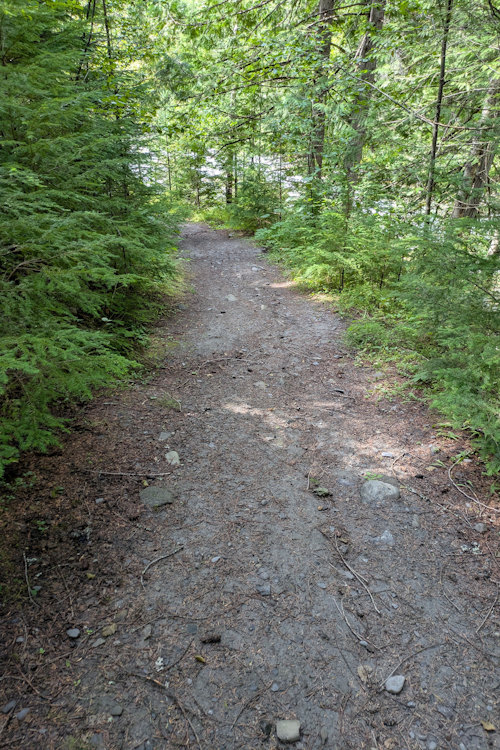
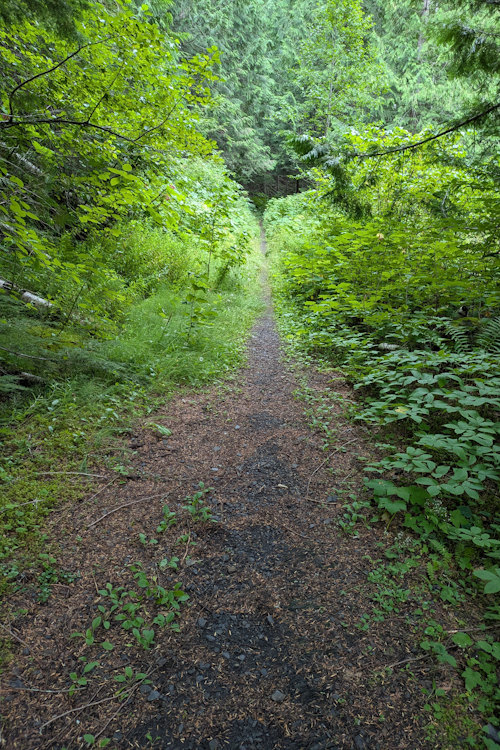
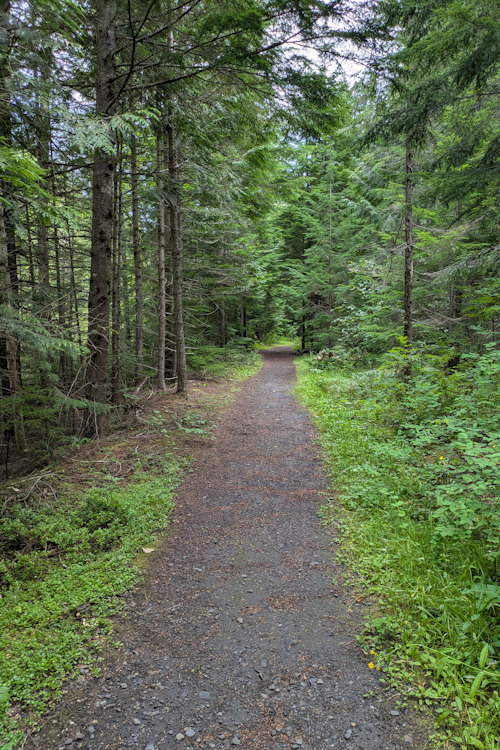
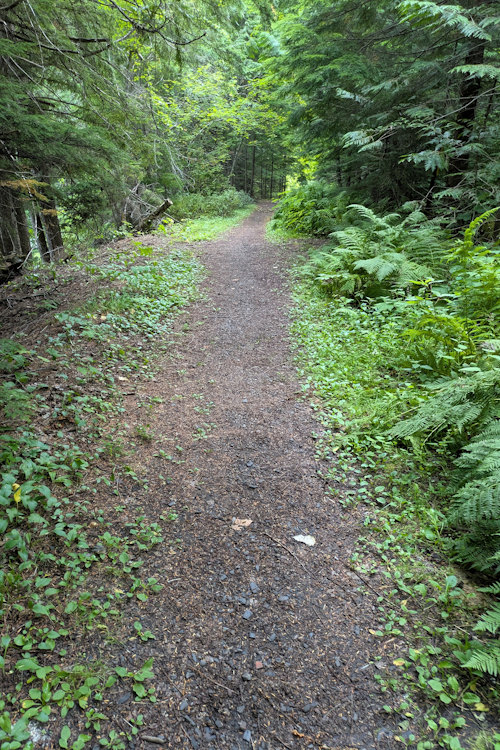
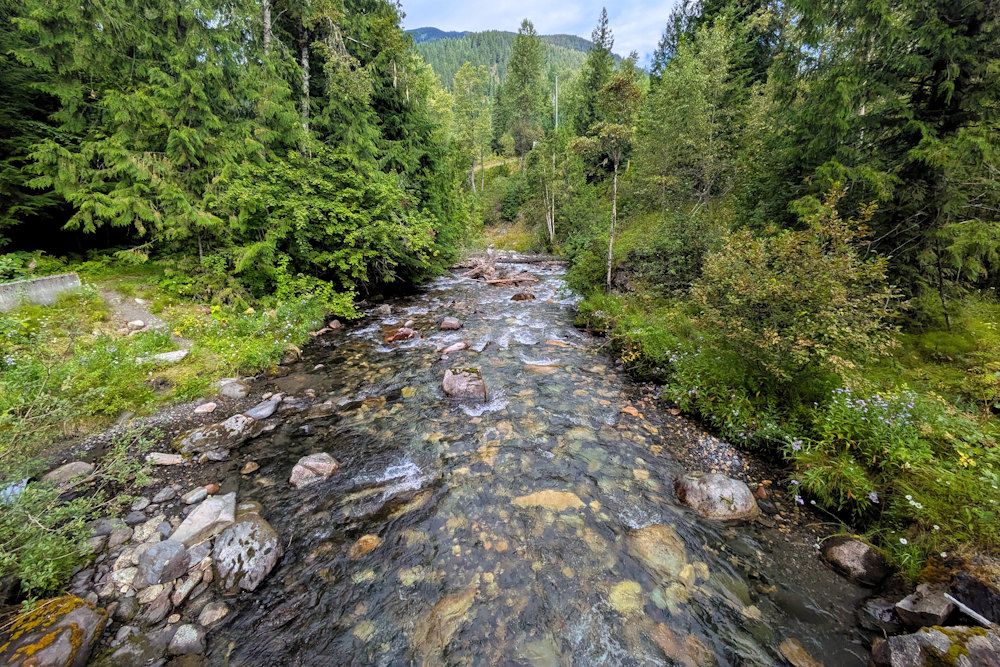
The trail generally follows the course of Carpenter Creek. There are points where you’ll get a close view of the creek and you’ll always hear it even when not easily in sight. Views of this vigorous mountain creek are quite lovely and worth a peak when you get the opportunity.
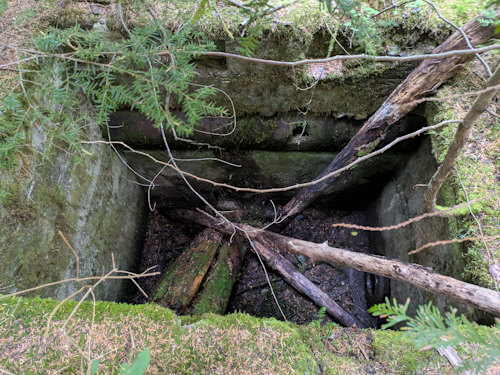
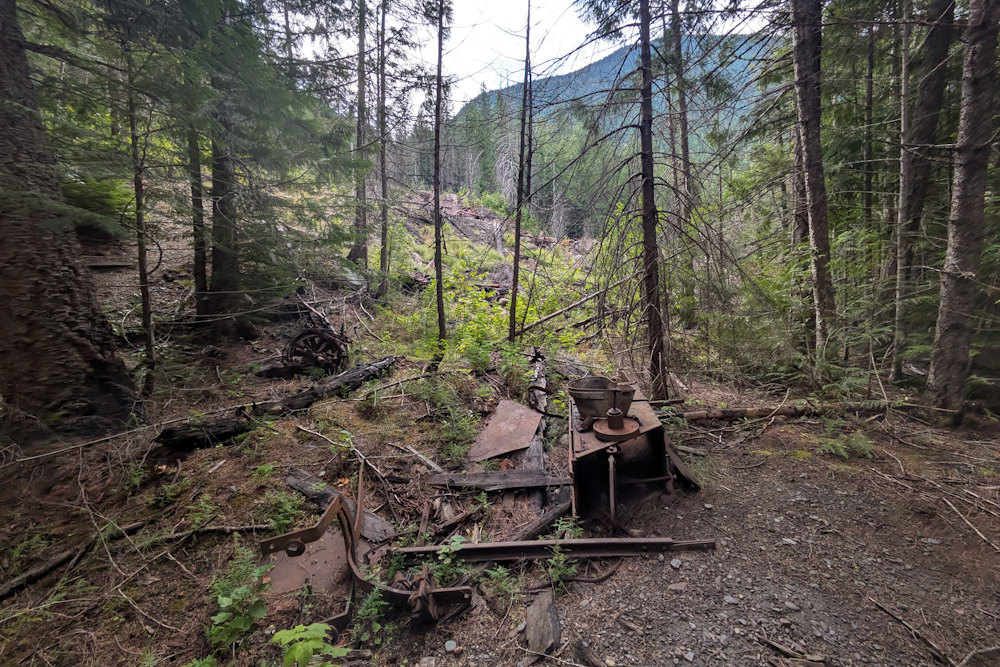
Along the way your eyes might catch glimpse of rusted relics and remnants of infrastructure from the past. These range from food packaging to steel machinery to concrete manholes. Not necessarily amazing stuff, but interesting when spotted. I imagine any genuine treasures have long since been plundered.

Galena Trail Closures
Unbeknownst to us, portions of Galena Trail were closed in the summer of 2025 when we showed up for our hike. Having come all that way to check out the ruins of Alamo Siding, we were less than thrilled to learn of these closures.
Choosing to hike as far as we could and see what the closures were all about, we headed out anyway. Closed sections were hard to miss with yellow caution tape and orange snow fence blocking the way.
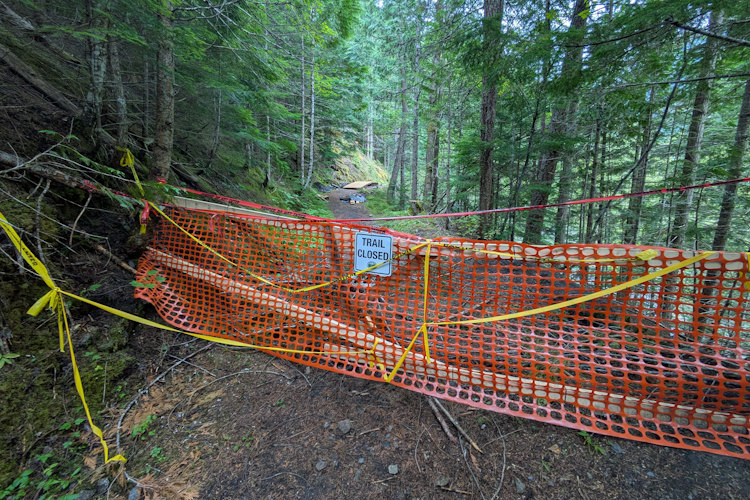
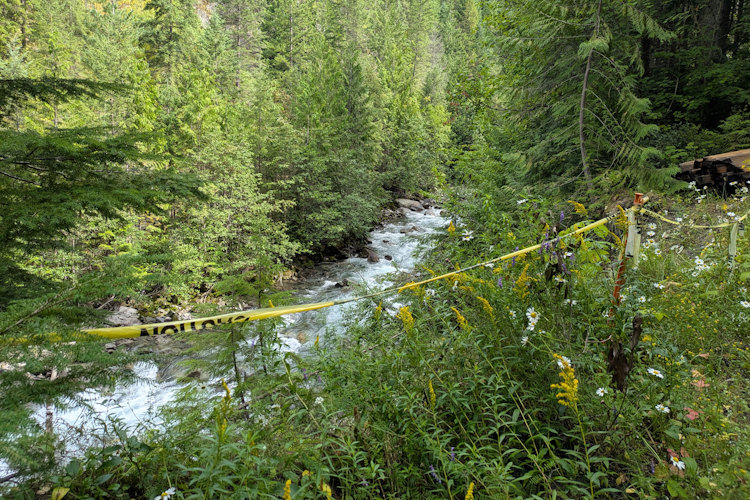
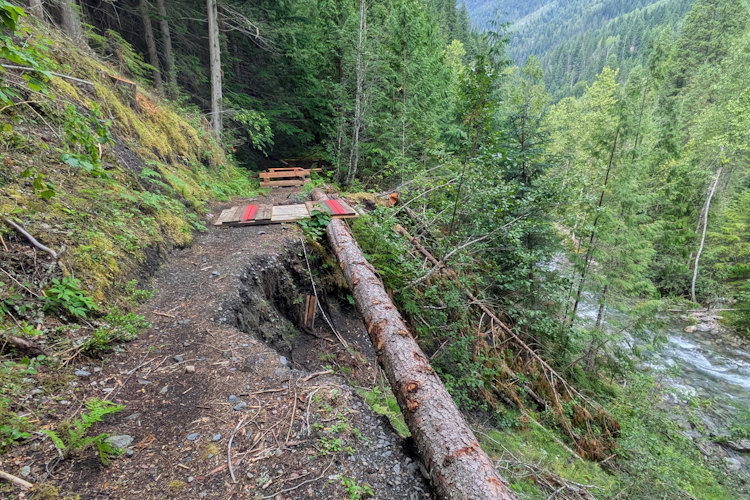
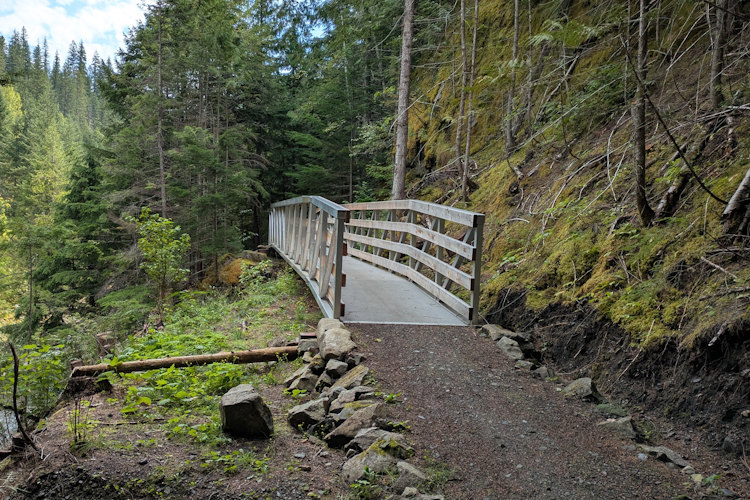
In one instance, we could see up the trail to the cause of the closure. It appeared to be bridge construction where rivulets crossed the trail. Others, we would learn, were the result of small landslides that had given way down to Carpenter Creek. Typically, these were wood bridges but there was also one instance of a metal bridge like the one at the trailhead.
Deciding that these obstacles were neither sufficiently dangerous nor impassable, we hopped the snow fence and carried onward. It was kind of exciting being rebellious like this. And when we finally got to Alamo Siding, I was glad we did. The payoff was worth the insubordination.
Alamo Siding
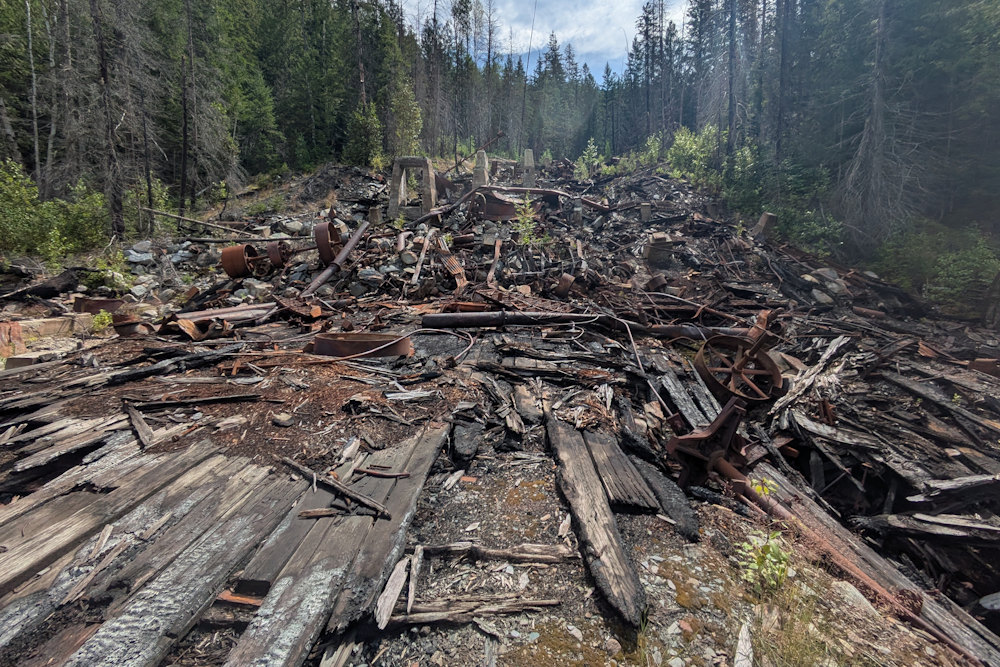
Alamo Siding is described as a ghost town which strikes me as a bit odd. It’s not what I typically envision a town to be, ghost or otherwise. Even vintage photographs of the place don’t reveal what I’d consider to be a late 19th or early 20th century boom town. There’s no main street lined with merchants, saloons, and brothels. And yet, Alamo Siding was once home to over 200 residents.
There was a post office, hotel, and a few shops in Alamo Siding, but the town was overwhelmingly dominated by a state-of-the-art ore concentrator mill, the first built in the Slocan Valley. Despite early riches, the Great Depression doomed the local mining industry and Alamo Siding would be abandoned entirely after a catastrophic flood in 1955. The derelict concentrator structures would eventually collapse and in 2018 were destroyed by fire.
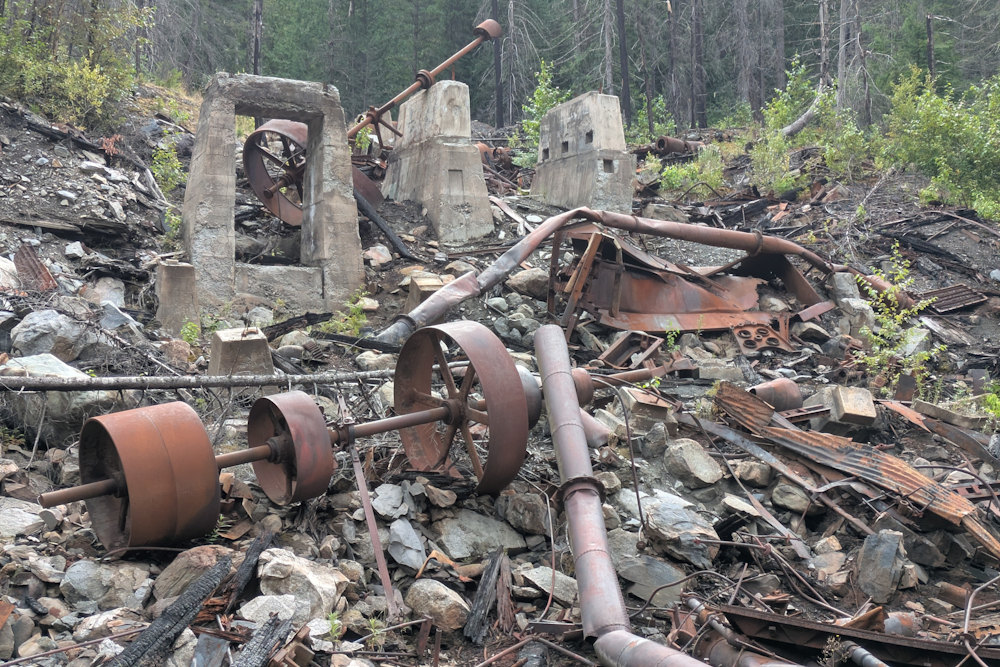
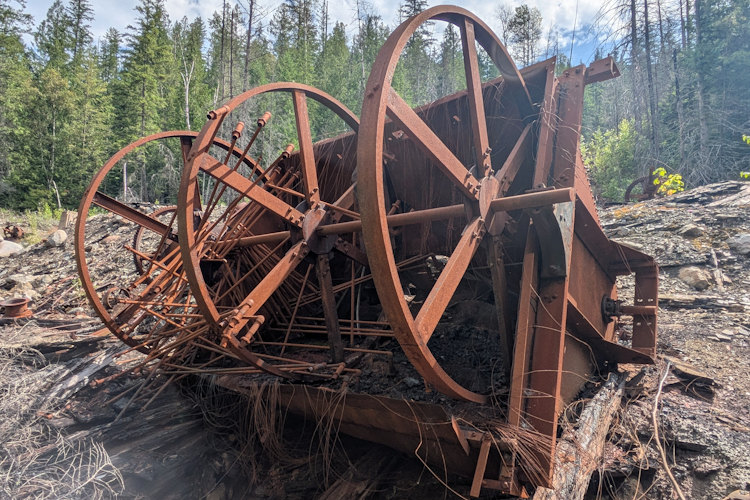
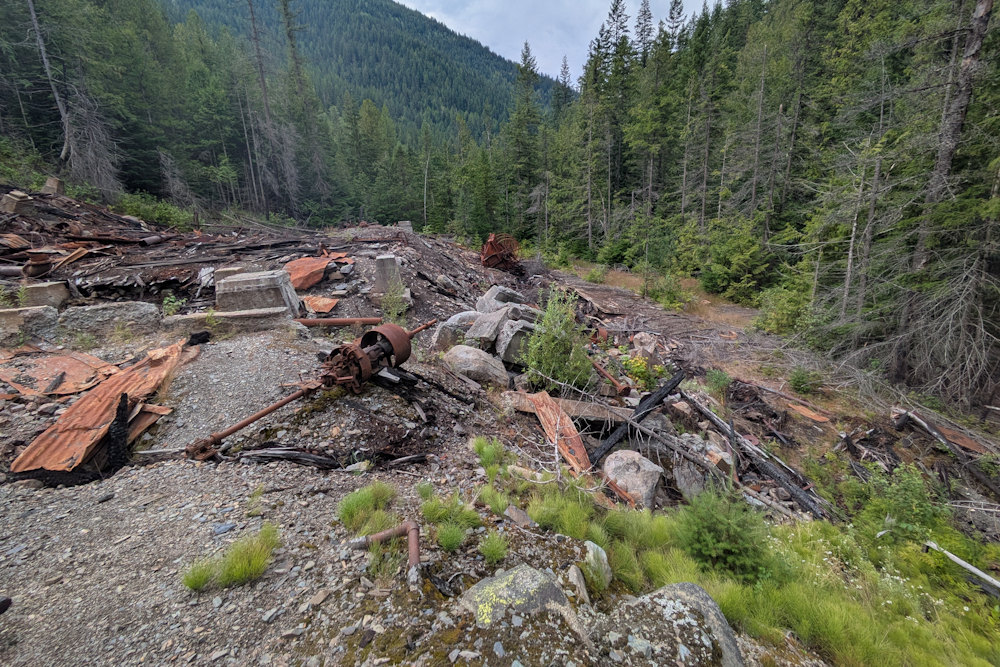
Today, torched timbers, rusted metal, and exposed concrete foundations of the once mighty concentrator mill are all that is left of Alamo Siding. And while I would have loved to see the collapsed structure before it burned to the ground, the site remains a fascinating ruin to explore, albeit carefully.
We spent a good amount of time probing the ruins. The sheer size of the place and the rusted ironworks grabbed most of our attention. Nothing valuable remains, of course. A cracked glass bottle was a neat find. And there were some pretty rocks around, though nothing I would describe as silver ore. Certainly, more interesting than what we found at the Payne Concentrator on our K&S hike later that same day.


The Cable Car Across Carpenter Creek
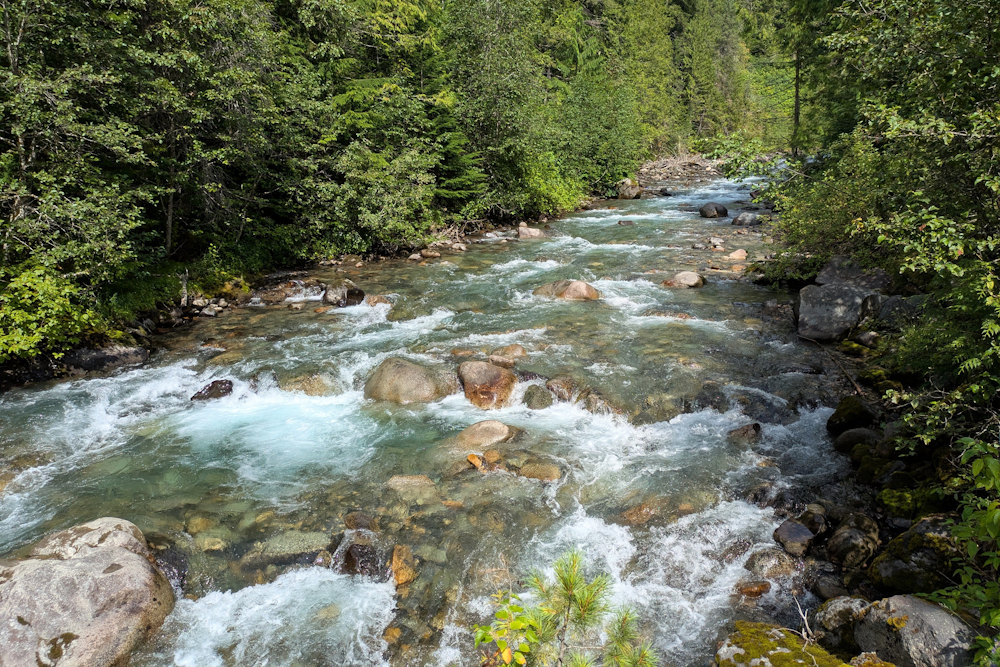
Before turning around and heading back to our vehicle, we ventured a little further down the trail to check out another little attraction. Not too far west of Alamo Siding, Galena Trail crosses to the north side of Carpenter Creek where it stays all the way to New Denver. It makes this crossing, not via a bridge, but with a cable car.
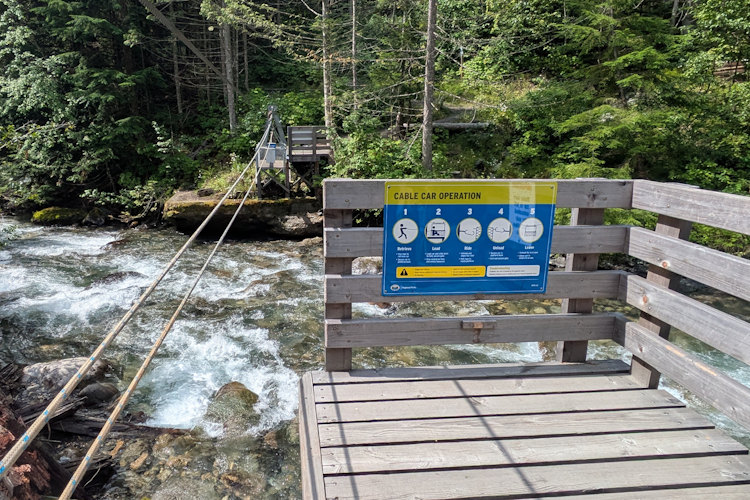
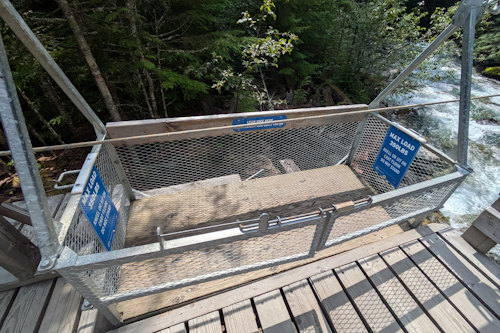
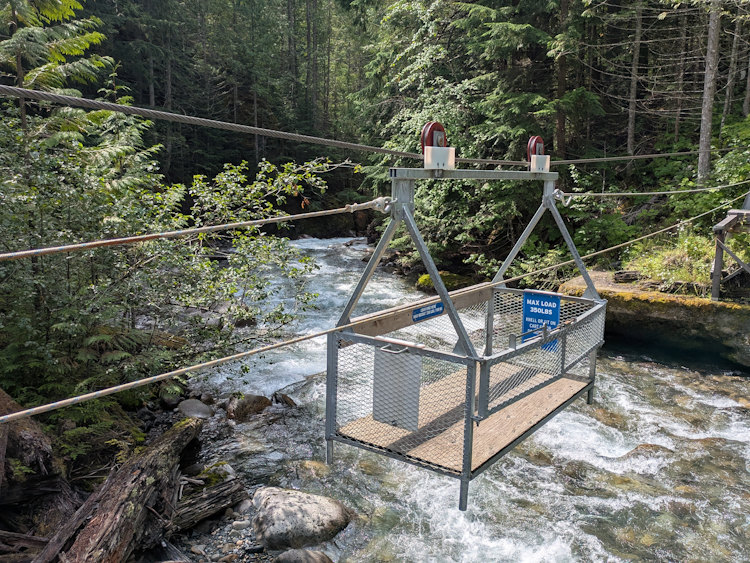
This hand-operated river crossing it nifty. I’ve never encountered such a device in my admittedly limited hiking experience. The cart has room for people and/or bicycles and is accessible via wooden loading platforms on either side of the creek. We didn’t cross ourselves but did send the cable car over and back for shits and giggles.
The Galena Trail Outhouse
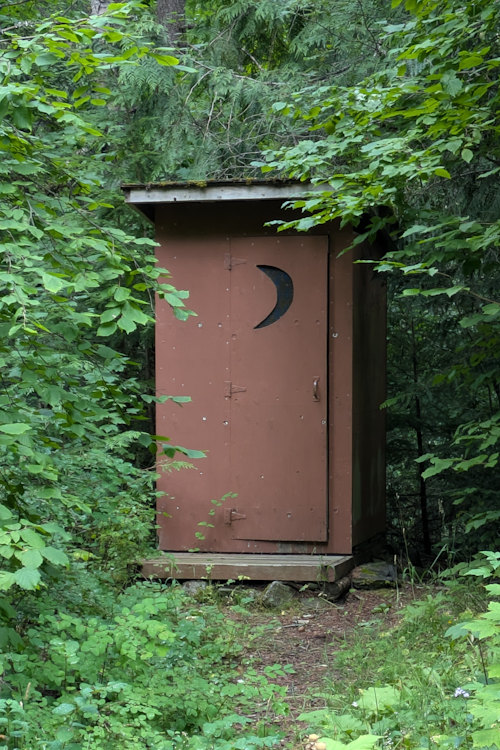
And with that, we began our return hike to the Three Forks trailhead. In doing so, we found one final item of intrigue on Galena Trail. Not very far from the east side of Alamo Siding is an outhouse. While not a relic, it does have an antiquated aura about it and the crescent moon in the door is a nice touch. And though undoubtedly convenient for hikers/cyclists in sudden need of relief, I had no desire to look inside.
Ultimately, we only hiked a small portion of the Galena Trail, but it was a very enjoyable portion. As part of a day trip to Sandon, it’s an ideal way to spend a couple hours connecting with nature and history. Check it out next time you’re visiting the beautiful Slocan Valley. And if you’re sticking around longer, give the whole trail a look-see.